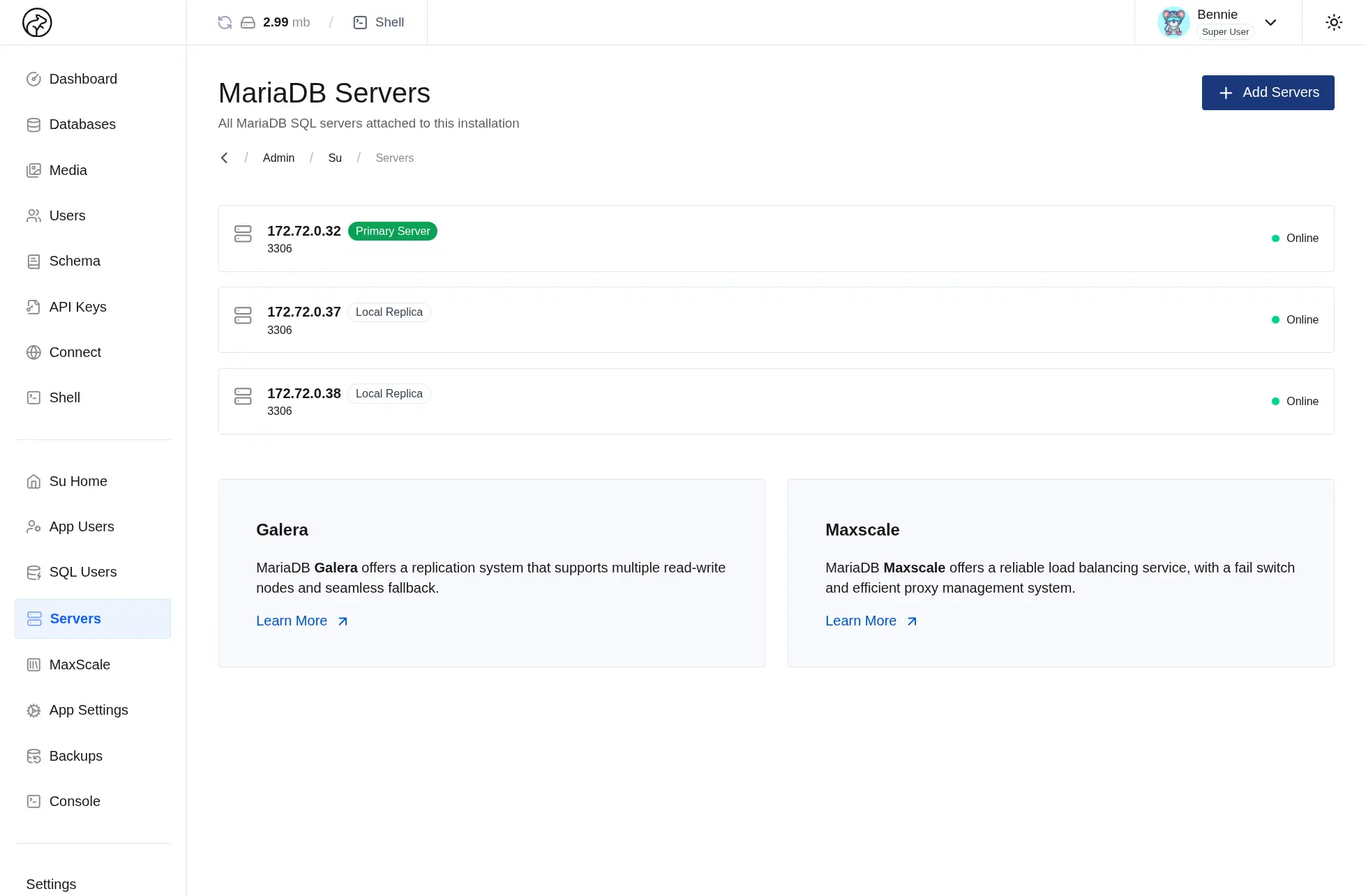
Datasquirel uses MariaDB Galera for replication and scaling, with MariaDB Maxscale for load balancing and failover. Together they give you a database stack designed to keep serving traffic when one node is unavailable.
How It Works
Datasquirel deploys a three-node Galera cluster as part of the default stack
MaxScale sits in front of the cluster and routes incoming traffic to healthy nodes from a single endpoint
If a node goes down, requests are shifted to the remaining healthy nodes automatically
When it comes back, the node re-syncs and rejoins the cluster without manual reconfiguration
Key Features
3-Node Galera Cluster Out of the Box
High availability is part of the starting point, not an upgrade path. Datasquirel includes a synchronized three-node cluster so one machine failure does not immediately become an outage.
MaxScale Load Distribution
Applications connect once and MaxScale handles the routing. Read traffic can be spread across healthy nodes while writes are directed appropriately behind the scenes.
Automatic Failover
Health checks run continuously. When a node becomes unavailable, it is removed from active routing until it is healthy again, which helps keep the service up during maintenance or unexpected failures.
No Single Point of Failure
The architecture is designed so a single database node does not take the whole platform offline. That gives teams more breathing room during incidents and maintenance windows.
Use Cases
Production systems: Keep the data layer available during node failures or routine maintenance
High-traffic applications: Spread query load more effectively as demand grows
Zero-downtime maintenance: Update or repair part of the cluster while the rest keeps serving traffic
SLA-focused teams: Start from a more resilient architecture without assembling the HA stack yourself
Ready to take control of your data?
Create a free account and start managing your databases in minutes, or deploy Datasquirel on your own infrastructure using the self-hosted community edition.